
Mastering the Art of Multi-Stop Trips
A comprehensive guide to avoiding the common pitfalls of multi-stop trips
GENERAL
5/28/20264 min read
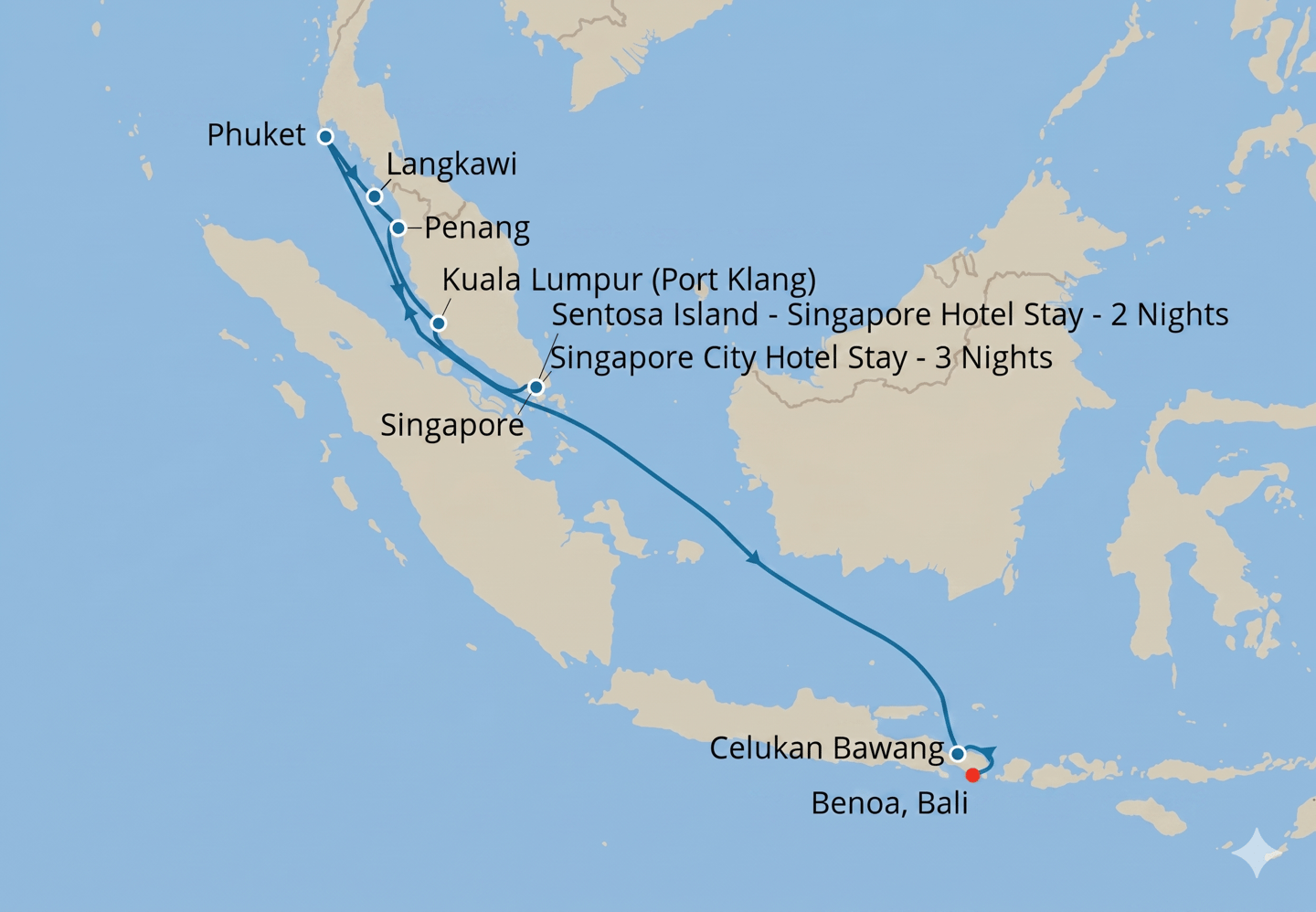
How to Plan a Multi-Stop Trip Without Losing Your Mind
Multi-stop trips are either the best thing you'll ever do or a scheduling nightmare that eats your holiday from the inside. The difference is almost entirely in the planning — not how much of it you do, but where you start.
Most people start in the wrong place. We've highlighted the main things we consider when planning trips. You can also download this as a free PDF Checklist here.
Start with the anchor, not the itinerary
The instinct is to open a map, pick three or four places that look good, and start connecting the dots. That's how you end up with a trip that looks great as a list but is brutal to actually live inside.
Start instead with your anchor — the one destination you most want to be in, the one that's driving the trip. Everything else gets planned around it. That means looking at what's geographically logical to combine with it, what transport links actually exist, and what the realistic travel time is between stops. Not Google Maps' optimistic estimate — the real version, including getting to the airport, check-in, and the fact that you will not feel like doing anything the evening you arrive somewhere new.
Give Each Stop Enough Time to Breathe
Our golden rule is three days/ three nights and move on. Three nights is usually the minimum for a stop to feel worth doing. Two nights sounds reasonable until you account for arrival day (you're tired, you're orientating, you're probably just finding somewhere for dinner) and departure day (early checkout, logistics). That leaves one full day. One day in a place is a taste — not a trip. The only time we do a two day stop is if we include drop tours so we can make our travel days work with us.
If your itinerary has more than three stops in ten days, something needs to come out. The places you don't visit properly aren't missed — they're just wasted money and wasted days.
Plan transport before you book accommodation
This catches people out more than anything else. You've found a great hotel in one city, then you look at getting to the next stop and realise the only reasonable option is a 6am flight or a five-hour bus that doesn't run daily. The hotel is now the problem.
Book your transport skeleton first — the flights, trains, or overnight buses between destinations — then build your accommodation around those. It's less satisfying than the other direction but it saves you from situations you can't easily undo.
On the train vs. fly question: if the journey is under three hours by train, it's almost always worth taking the train. No airport, no check-in, city centre to city centre, and you actually see something. For Europe in particular, rail is genuinely better than flying for a lot of connections — Eurostar, the Spanish AVE, Italy's Trenitalia — once you price in travel to the airport and the two hours you need before the gate closes.
Travel Light: One Bag, Every Time
Multi-stop trips are the strongest argument for travelling carry-on only. Every time you add a checked bag to a multi-destination trip, you add a dependency — on luggage belts, on airlines not losing it in transit, on the amount of energy you have to drag it between stops. The more stops, the more times that dependency becomes a problem.
It's possible to do two weeks across multiple countries from a single carry-on. The packing guides in The Travel Log guides cover how to approach this for specific destinations — what the climate actually requires, what you can buy there if needed, and what can safely be left at home.
Build in one buffer day
Somewhere in a trip of five days or more, things shift. A place is more interesting than expected and you want more time. A travel day runs over. You get tired and need a morning where you don't have to be anywhere by 10am.
A buffer isn't wasted — it's what separates a trip that feels like it went well from one that just about held together. Even if you don't need it, a day with no fixed plans is a good day.
What to actually book in advance
For multi-stop trips: flights and trains between destinations, accommodation for the first night in each new city, and anything time-specific you'll genuinely be upset to miss (a specific restaurant, a museum with timed entry). Everything else — day trips, activities, restaurants — book as you go. You'll have a better sense of what you actually want once you're there.
Trying to plan the whole thing in advance turns the trip into a performance of the itinerary rather than an actual holiday. Plus one of our favourite traditions it to get there to a new place and plan our adventure for each leg.
The Travel Log Method applied to multi-stop trips
Everything I've described above maps onto the same four-step process I use for every destination at The Travel Log:
Find the places actually worth going to (not just the ones that performed well on TikTok this week),
Filter by what actually matters for your trip — your budget, how many days you have, how much you want to move,
Map each stop before you leave so everything is ready to open on your phone the moment you land, then
Go — with the logistics already settled and your energy saved for the actual trip.
Multi-stop planning feels complicated because people try to do all four steps at once. Do them in order and it becomes manageable. Find your anchor first. Filter out the stops that don't logistically fit. Map the transport skeleton. Then go.
The destination guides on The Travel Log are built around this process for each destination — what's worth your time, what fits together geographically, and what you need to know before you book.
Before you go...
Planning a multi-stop trip? Browse the Travel Log guides to see which destinations are mapped, timed, and ready to go — so the only thing left to do is book it.
Don't see your ideal destination? We can create a bespoke itinerary or review your current itinerary for gaps and improvements - just check out our Bespoke Planning page for more details.
The Travel Log
Contact
Get new guides straight to your inbox.
© 2026. All rights reserved.
Media
Work with us
About Us